
Early Learning Center
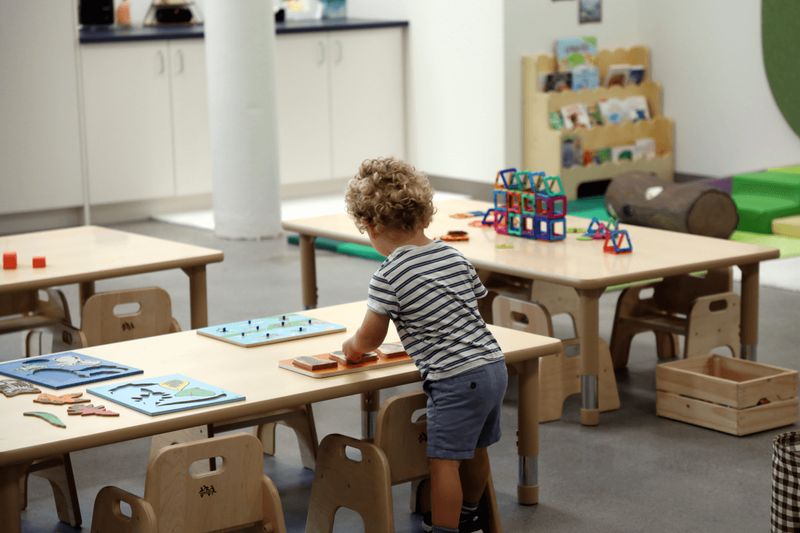
Our Early Learning Center (ELC) offers a warm and engaging environment to explore, play, and thrive. With a focus on whole-child development, we nurture early social-emotional skills, spark curiosity, and lay the foundation for a lifelong love of learning in partnership with each family.
We practice cura personalis, nurturing each child’s mind, body, and spirit while fostering a kind community.
Children learn through hands-on, socially attuned experiences that promote self-awareness and healthy conflict resolution.
Our outdoor practices inspire curiosity to recognize the divine in all things.
Carefully curated experiences meet each child's developmental needs and support a smooth transition to Kindergarten at St. Joseph School.
Each child's strengths are celebrated, while support is offered for individual challenges.
We have distinct communities as part of the Early Learning Center. Each intentional community is designed to provide a nurturing environment where the children can learn and grow.
At ELC, faith, play, and nature form the foundation of every program and every stage of a child’s development. We believe young children learn best through meaningful relationships, hands-on experiences, and opportunities to explore the world around them.
Faith is woven into daily life through prayer, kindness, gratitude, service, and an understanding that each child is made in the image of God. Through purposeful play, children develop creativity, confidence, problem-solving skills, and a lifelong love of learning. Nature provides opportunities for discovery, wonder, movement, and connection to creation, helping children develop curiosity, resilience, and respect for the world around them.
As children move from one program to the next, these three foundations remain constant while experiences become increasingly rich and developmentally appropriate. Each classroom builds upon the skills, confidence, and independence developed in the previous year, creating a thoughtful progression that prepares children not only for Kindergarten, but for a lifetime of learning, growth, and belonging.
Beginning with the 2027–28 school year, we will no longer offer an infant program.
In its place, we will offer a Waddler classroom for children who will be one year old by August 31. This structure aligns more closely with the needs we are seeing from families and allows us to build a program that is more stable, consistent, and sustainable over time.
We are no longer accepting applications for our infant program.
Designed for children 12–29 months
Must be one year old by August 31 to apply
Monday-Friday 7:00 am-5:30 pm
Year-round program (includes summer)
Scheduled breaks: Follows our K-8 program calendar for holidays and breaks, with additional times throughout the year for reset
The Waddler program helps children build confidence, trust, and independence through nurturing relationships, consistent routines, and guided exploration.
Designed for children 24–36 months
Must be two years old by August 31 to apply
Monday-Friday 7:00 am-5:30 pm
Year-round program (includes summer)
Scheduled breaks: Follows our K-8 program calendar for holidays and breaks, with additional times throughout the year for reset
Building on the routines and independence established in the Waddler program, the Toddler program encourages children to take greater ownership of their daily experiences while continuing to strengthen communication, motor development, and social-emotional skills.
Must be three years old by August 31 to apply
Monday-Friday 8:30 am-3:30 pm
School year program: follows the calendar of our K-8 program for the first and last days of school, including holidays and breaks
Extended day options and summer program available (additional fees apply)
Building on the independence and social-emotional foundations developed in the Toddler program, Preschool encourages children to grow as creative learners, problem-solvers, and members of a classroom community.
Must be four years old by August 31 to apply
Monday-Friday 8:30 am-3:30 pm
School year program: follows the calendar of our K-8 program for the first and last days of school, including holidays and breaks
Extended day options and summer program available (additional fees apply)
The Pre-K program builds upon the strong social-emotional, language, and independence skills developed throughout the ELC while intentionally preparing children for a successful transition into Kindergarten and the broader St. Joseph School community.